
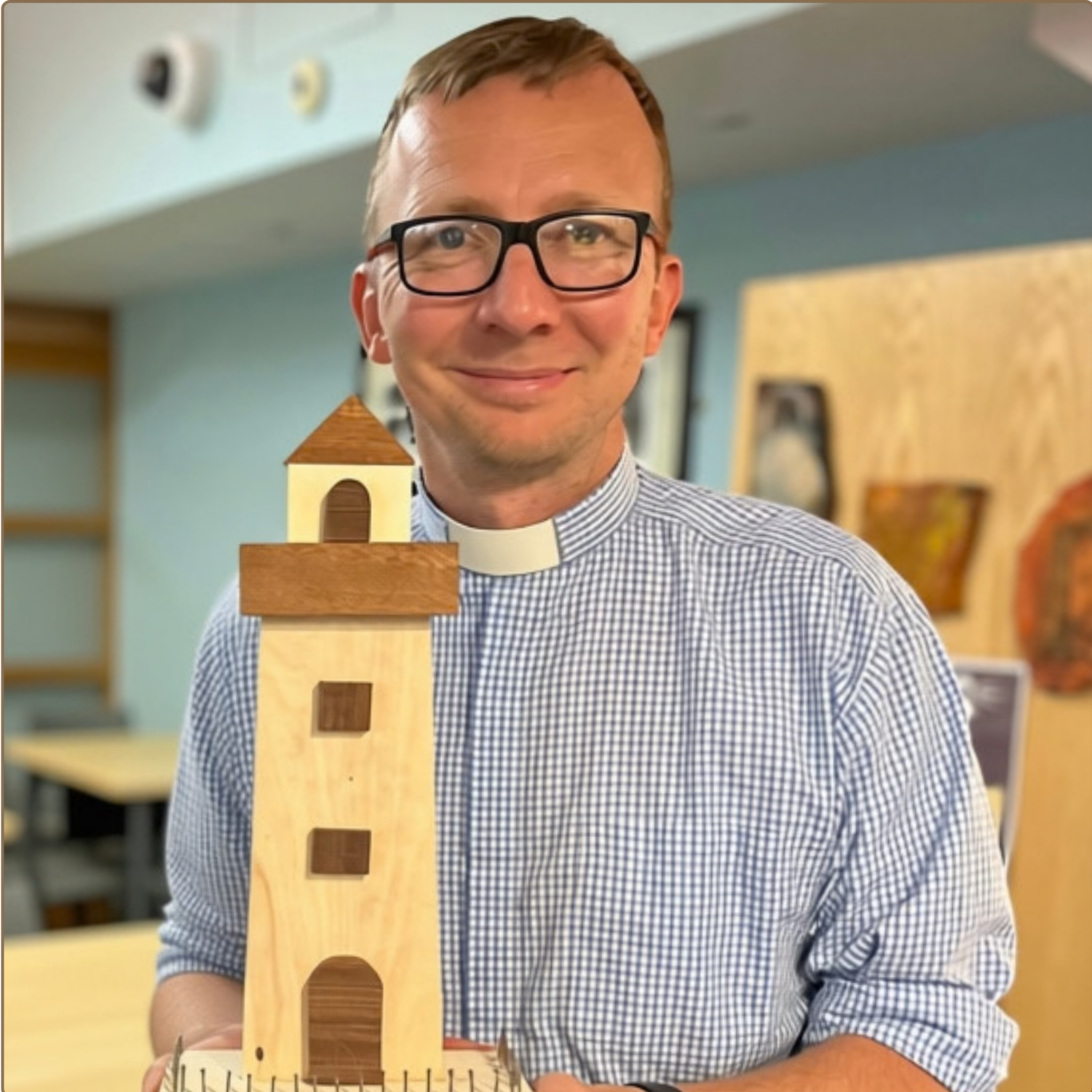
Missional Leadership on Monday, 5th October 2026
Church should move towards pain rather than away from it, Revd Jon Swales told delegates at Monday’s missional leadership seminar, drawing on twelve years of planting and leading a church among adults with multiple and complex needs.
Jon is an Anglican priest, poet and prophetic theologian. He leads Lighthouse West Yorkshire, a Christian community and Leeds-based charity for adults who have been battered and bruised by the storms of life.
His session told the story of Lighthouse as it has been messy, surprising and often difficult.
A missiology that moves towards the pain
At the heart of Jon’s message was a challenge to a church that can drift towards what is comfortable, manageable and tidy. Lighthouse, he explained, has gone the other way.
The Church is not a cruise ship for the comfortable; it is a rescue ship for the broken. We are not called to sail away from the storm, but towards it — carrying the love, mercy and compassion of Jesus into the places of deepest pain.” — Revd Jon Swales
From recipients to church
Jon spoke about what happens when people on the margins are not simply recipients of mission but become part of the church itself. Using stories and case studies from the Lighthouse community, he showed how these change the shape of leadership, belonging and faith.
He drew on Scripture and on what he calls hope-filled realism, avoiding both easy optimism and despair. Alongside the case studies, he shared poetry that sought to hold deep pain and the hope found in Christ together, without rushing to resolve the tension.
The reality of leading
Jon was candid about the challenges of missional leadership. He spoke openly of the failures, surprises and frustrations of twelve years at Lighthouse, as well as the unexpected signs of the Kingdom that have appeared along the way.
A church that is not neat
The seminar ultimately asked what happens when the church stops trying to be neat and manageable. Jon’s invitation to those leading in mission was to move towards the places of pain, vulnerability and hope, and to see what God does there.