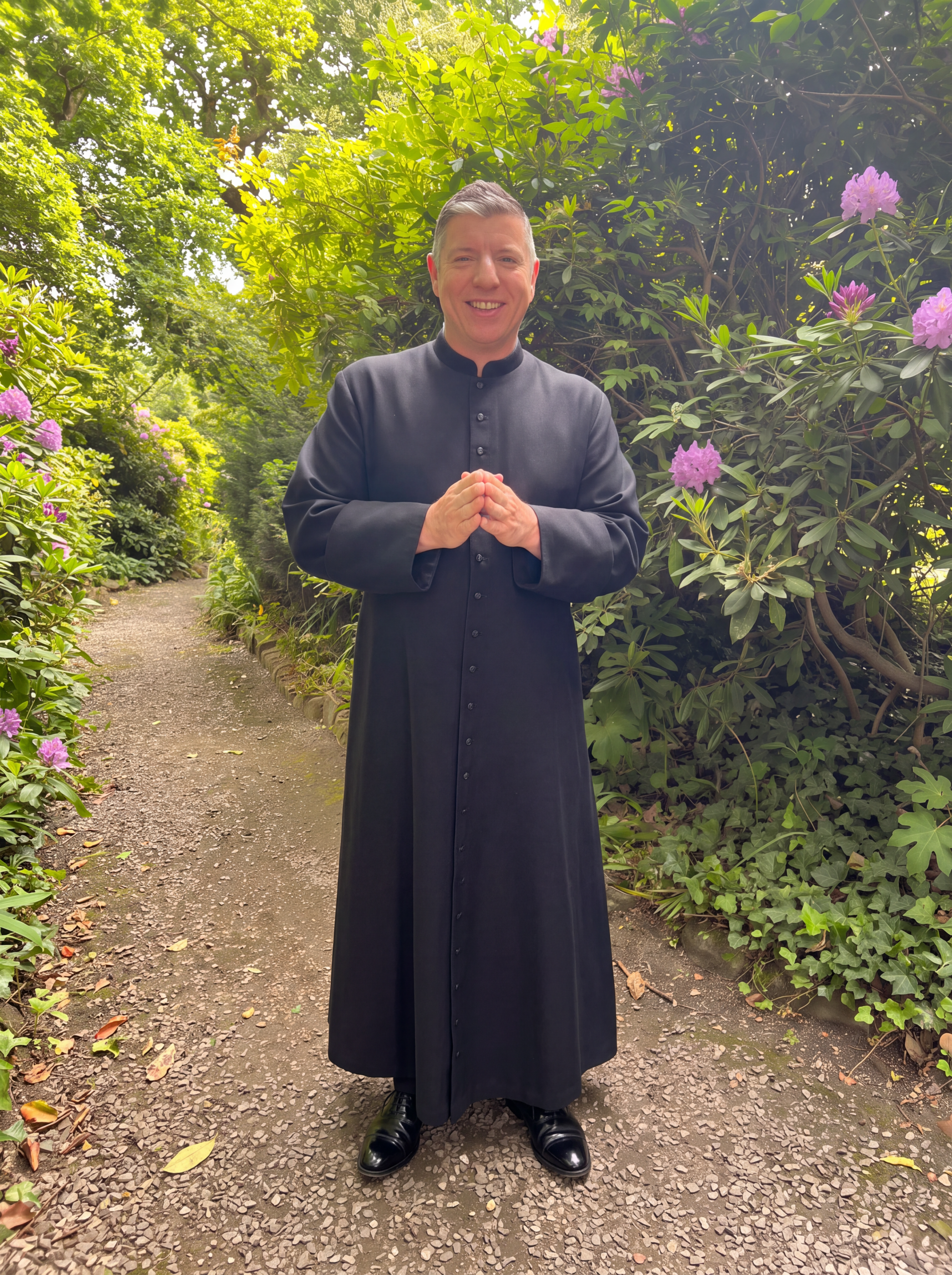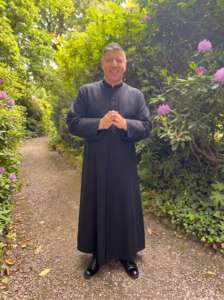
Richard Brooke grew up amid poverty, addiction and crime on the council estates of Luton and West Yorkshire, long before he found his calling in the Anglo-Catholic tradition. Now a third-year student at St Hild preparing for ordination to the diaconate in 2027, he shares how his story has shaped his vocation.
I am a traditional Catholic, and my formation is anchored in the ecclesiastical identity of the universal Catholic order, the ministerial priesthood of apostolic succession, and the Catholic doctrine of the sacraments.
Growing up on the estates
I am the son of Yorkshire miners from an Irish background. My dad travelled around the country with us, looking for contract work as a miner and steelworker. When I was young, I saw both my dad and my grandad still working in the mines, and my mum was a cleaner all her life. I have seen extreme poverty and destitution where I grew up, on run-down council estates in Luton. I shared a small bedroom with my two brothers, and we survived on food banks, with an outside toilet and no hot water. As an early teen, I moved with my family back up to West Yorkshire, to impoverished council estates. I grew up through the miners’ strikes, riots and mass unemployment, which affected my community terribly.
A brutal start, and a shepherd’s heart
My early years were brutal and violent. My parents struggled with depression and addiction, so as the oldest boy I had to be a father to the rest of my siblings. Getting us up, fed and dressed for school made me a protective older brother and, I believe, nurtured my character as a loving shepherd and guide who walks with others through trials and tribulations.
All I knew was alcoholism, drugs, prostitution and crime. I look back now with thanks and praise to God that he brought me through some scary experiences in one piece. I believe he had plans for me that are now coming to fruition in my later life, as I prepare for ordination.
Seeking God in the chaos
Living through those teenage years affected me deeply. Seeing the desperation, scarcity and hopelessness of my environment started my journey of seeking God in the midst of the chaos.
Surviving inner-city life and urban culture shaped my identity. I ran underground raves and DJed, which at first gave some light and hope to those trapped in the urban slums. But when guns, heroin and overdoses began to appear regularly, I knew I had to move on and escape, as things were turning very dark, very quickly.
Coming home to the Bible
I had started to absorb religious influences from other cultures and, being an avid reader, picked up books on many different faiths. However, reading the Bible was like coming home. Although my family were not church-goers, I began to explore worship myself. I was asking the big questions: why are we here, who created us, and what is our purpose in life? I was fascinated by monastic life and dreamt of becoming a priest, but I didn’t believe someone like me would ever be smart enough to be chosen. I had no opportunities and faced a life of crime, manual labour or the dole.
Art, university and a spiritual awakening
However, I had been creating urban murals and graffiti art around Leeds and Manchester to promote our events, and I became involved in youth art projects, getting local kids involved in street art. I wanted to pursue a career in illustrative art or the priesthood, as both were spiritual disciplines that fascinated and attracted me.
My spiritual exploration fuelled my creative painting through a college course, and I secured a grant to go to art school at the University of Brighton. For the first time, I was free to explore my spirituality, unhindered by others. In a sense, I could be born again, away from poverty.
I felt another calling during my university years, when I became a regular at the Anglo-Catholic churches I found in town. Entering those sacred spaces, it felt as though I were outside of time and space. The worship at Mass was a mystical, multi-sensory event like nothing I had ever experienced. I walked through many church doors to see where God was calling me, and when I entered St Bartholomew’s in Brighton, it blew my mind into a million pieces. I had never experienced anything like it in my life, and it was a turning point in my calling to the priesthood in the Anglo-Catholic tradition.
A mysterious priest and a persistent call
When I returned up north, I struggled again to feel worthy enough to explore a vocation. I would visit churches alone to pray, and once a mysterious priest sat down next to me. We spoke for a couple of hours before he asked me, out of the blue, “When are you going to follow your calling to serve?” He could see it in me, and I was shocked and excited to my core. I have never been able to track him down to thank him. Perhaps he was an angel sent to guide me.
I moved around, working as a web designer in media agencies across the north and gaining valuable experience in life. The work was interesting, but I always had the thought in the back of my mind that I was supposed to be doing something else, and a voice kept singing a song in my heart to follow the path to serve God.
I grew up knowing only alcoholism, drugs, prostitution and crime – but reading the Bible was like coming home.”
Discerning my vocation
I sought out a priest to speak to in my town, who happened to be the Diocesan Director of Ordinands (DDO) for the Diocese of Leeds. I took this as a sign that I was finally on the right road! He set me on the path of discernment and introduced me to my Spiritual Director, who now guides my formation with love and wisdom in our tradition. I was originally accepted for training as a self-supporting minister (SSM), but God’s hand has ensured that his will be done, and I am now training for full-time stipendiary ministry as a parish priest in the Diocese of Leeds.
Faith, sacrament and the saints who went before
The parable of the Prodigal Son speaks to me on a profound spiritual level. It has become a symbol of my personal road to redemption and of my devotion to the Sacrament of Reconciliation. Forgiveness grants us sanctification of the soul through access to the Eucharist, which gives us a foretaste of the Heavenly Banquet.
Devotion to the Blessed Sacrament, and Christ’s constant call to draw near to him at the altar, is central to my worship, along with a strong daily routine of prayer. I look to famous Anglo-Catholic priests such as Fr. Lowder, Fr. Mackonochie and Fr. Wainwright, who walked this road before me through the Victorian slums of England, and I draw strength from their lives among the most deprived communities. I believe they lived and breathed the Gospel message, immersing themselves in places of poverty to serve and minister sacramental grace. They were incarnational in their ministry, walking alongside God’s people through all of life’s events.
“Do you want to be healed?”
Jesus asked the sick man by the pool, “Do you want to be healed?” I have always pondered this deeply, for to be healed means allowing yourself to be changed forever. You need to be prepared, and many people are not ready or believe they do not need to change. However, the act of being baptised and reborn as a disciple commands you to repent, confess and be transfigured by Christ’s love. To be Christian is to be on a journey of discipleship, allowing Christ to change every part of you on your exodus.
I have approached my discernment, training and soon-to-be curacy with this attitude of allowing myself to be changed by Christ in every way he requires, with trust and faith. I would offer this message to new students: prepare for change, allow it to happen, and your journey will be glorious.
Called as myself
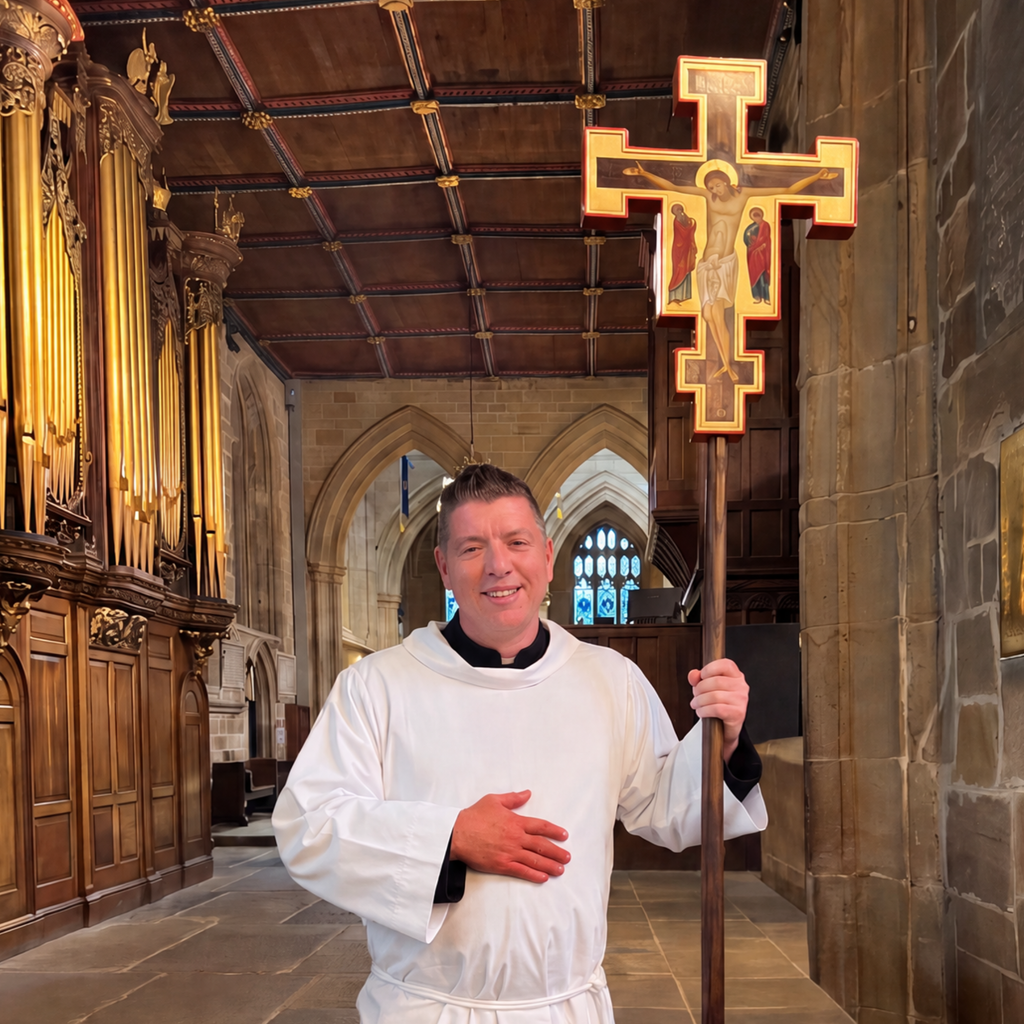
I believe God has called me as myself, with all my life experiences preparing me for future ministry. I wish to get my hands dirty for God in the urban wastelands where people are lost, forgotten or alone. As his shepherd, I long to find those wandering sheep, as a priest once did for me, and bring them home.
Why St Hild
I wanted to study at St Hild because the Community of the Resurrection has a long history of forming underprivileged working-class men in the Anglo-Catholic tradition who were too poor to fund their own training. As a traditional Catholic, I knew I would be able to experience the monastic life of the brothers, as well as join them for daily office and Sunday Mass. This is unique to St Hild and Mirfield. There is a wonderful overlap of daily worship rhythms between the monastery, the college and St Hild that makes you feel like one family. It is easy to make friends with anyone on the site, and you will find yourself mixing with people from many different backgrounds and traditions with ease, learning so much from each other.
I am a third-year student now, being prepared for ordination to the diaconate in 2027 in the Diocese of Leeds, and the time has flown. I have valued my time at St Hild enormously and made some incredible memories to keep. I look forward to coming back in future as an alumnus and to always being part of the community.